


A beautiful day spent outdoors can quickly turn scary. Imagine a mother looking at her child and noticing a tiny, dark speck on her eyelid. At first, she might think it’s just dirt or a stray eyelash. But a closer look reveals something much more alarming. This is the reality for some parents, as in one recent case where a woman finds tick in daughter’s eyelashes after a family outing. This shocking discovery is a powerful reminder that ticks can hide in the most unexpected places.
While it sounds like a rare event, it happens more often than you might think. This experience highlights the need for all parents and outdoor lovers to be extra careful. Knowing what to do in this situation and how to prevent it can keep your family safe from the dangers these tiny pests carry. This article will guide you through the steps to take, the risks involved, and how to protect your loved ones.
What Should You Do First If You Find a Tick on an Eyelid?
Finding a tick on an eyelid or near the eye is a delicate situation. The skin around the eye is thin and sensitive, making it a tricky spot for removal. Your first instinct might be to panic and try to pull it off immediately. However, it is very important to stay calm. The area is close to the eye, so any sudden movements could cause injury. Do not try to use home remedies like petroleum jelly, nail polish, or a hot match. These methods are not effective and can make the tick burrow deeper or release more saliva, which increases the risk of disease transmission.
The most important first step is to assess the situation carefully. If the child is calm and you have a clear view, you might consider removing it yourself if you feel confident. But because of the risk to the eye, the safest option is often to seek medical help right away. A doctor or a nurse at an urgent care clinic has the right tools and a steady hand to handle such a sensitive removal.
How Can a Tick Be Safely Removed from an Eyelash?
Removing a tick from an eyelash line requires precision and the right tools. If you decide to do it at home, you need a pair of fine-tipped tweezers, not the blunt-end kind you might use for your eyebrows. The goal is to grab the tick as close to the skin’s surface as possible.
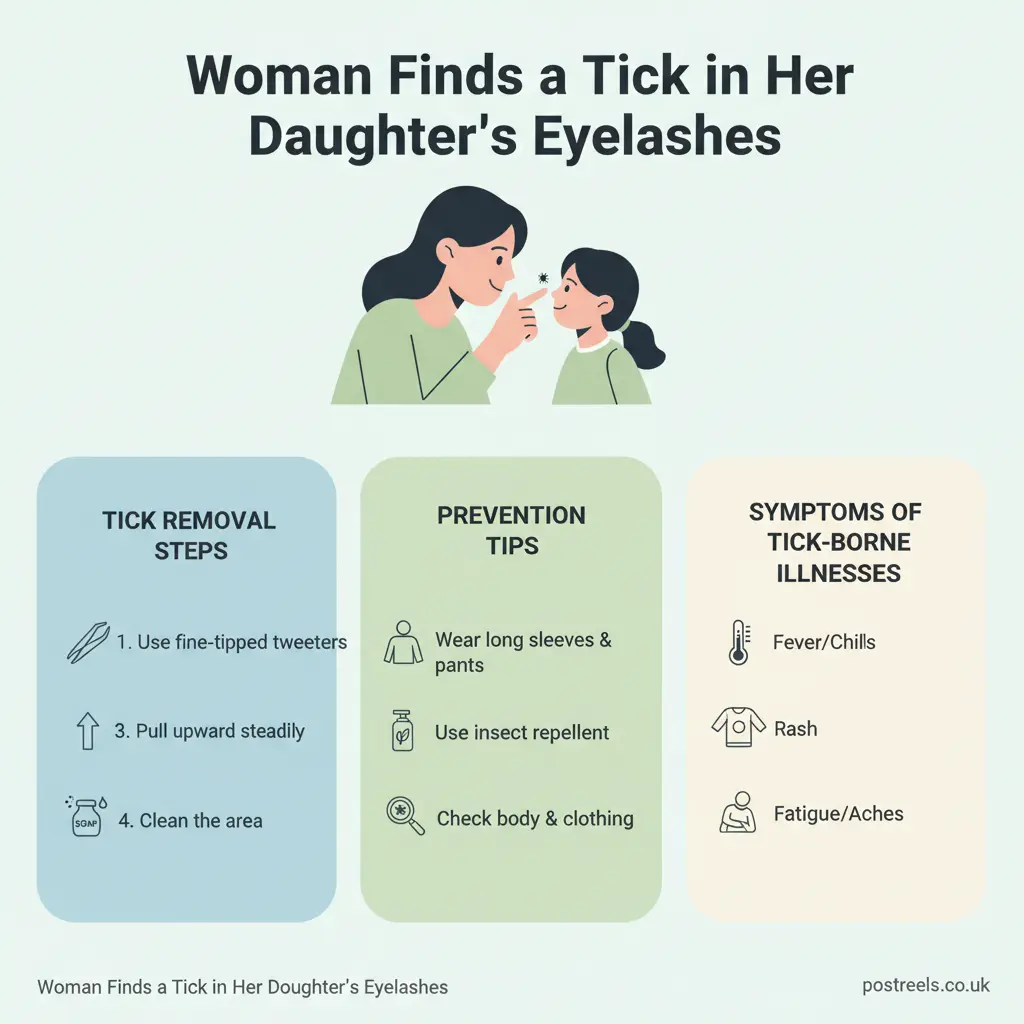
Step-by-Step Removal Guide
- Clean the Area: Use an alcohol wipe to gently clean the area around the tick. Be careful not to get any alcohol in the eye.
- Grasp the Tick: Use the fine-tipped tweezers to grab the tick’s head, right where it enters the skin. Do not squeeze the tick’s body, as this can push infected fluids into the bloodstream.
- Pull Straight Out: Pull upward with steady, even pressure. Do not twist or jerk the tweezers. This could cause the mouth-parts to break off and remain in the skin. If this happens, try to remove the mouth-parts with the tweezers. If you can’t, leave them alone and let the skin heal.
- Clean the Bite Site: After removing the tick, thoroughly clean the bite area and your hands with rubbing alcohol or soap and water.
- Dispose of the Tick: You can get rid of the live tick by putting it in alcohol, placing it in a sealed bag, wrapping it tightly in tape, or flushing it down the toilet.
If the tick is very close to the eye, or if the child is too young or scared to stay still, it is best to let a professional handle it. In the story of the woman who found a tick in her daughter’s eyelashes, the family went to a healthcare center. It took two hours and a team of nurses to safely remove it while keeping the toddler calm. This shows that professional help is sometimes necessary for a safe outcome.
Why is a Tick on an Eyelash So Dangerous?
A tick on an eyelash is dangerous for several reasons. First, the proximity to the eye itself is a major concern. Any attempt at removal, especially on a squirming child, risks scratching the cornea or causing other eye injuries. The skin on the eyelid is also very thin, which might allow for quicker transmission of any diseases the tick is carrying.
Beyond the immediate physical risk to the eye, the main danger comes from tick-borne illnesses. Ticks are known carriers of serious diseases. Depending on where you live in the United States, different ticks carry different germs.
Common Tick-Borne Diseases in the U.S.
- Lyme Disease: Most common in the Northeast, mid-Atlantic, and upper Midwest. It’s carried by the blacklegged tick (or deer tick). Early symptoms include fever, headache, fatigue, and a characteristic “bull’s-eye” skin rash.
- Rocky Mountain Spotted Fever (RMSF): Found throughout the U.S. but most common in North Carolina, Tennessee, Oklahoma, Arkansas, and Missouri. It is carried by several types of ticks. Symptoms include fever, headache, rash, and nausea. It can be severe if not treated early.
- Ehrlichiosis: Transmitted by the lone star tick, mainly in the South and East. It causes flu-like symptoms.
- Anaplasmosis: Carried by the blacklegged tick, this disease has symptoms similar to ehrlichiosis and is found in the upper Midwest and Northeast.
The story of the woman who finds a tick in her daughter’s eyelashes serves as a critical warning. What seems like a tiny pest can lead to a serious health crisis if not handled correctly and monitored afterward.
What Are the Symptoms of a Tick-Borne Illness to Watch For?
After a tick bite, it is crucial to watch for symptoms for the next 30 days. Not every tick bite leads to disease, but early detection is key to effective treatment. The mother in our story was advised to monitor her daughter closely after the removal.
Key Symptoms to Monitor
- Rash: The bull’s-eye rash (erythema migrans) is a classic sign of Lyme disease, but other rashes can appear with different illnesses. Any rash at the bite site should be checked by a doctor. The rash can appear anywhere from 3 to 30 days after the bite.
- Flu-Like Symptoms: This is a common sign for many tick-borne diseases. Look for fever, chills, headache, fatigue, and muscle or joint aches.
- Swollen Lymph Nodes: Pay attention to any swelling, especially near the bite area.
- Nausea or Vomiting: These can be signs of more severe infections like RMSF.
If any of these symptoms appear, contact your doctor or pediatrician immediately. Be sure to tell them that your child was bitten by a tick, when it happened, and where you were when the bite likely occurred. This information helps them make an accurate diagnosis. Keeping the tick for identification can also be helpful.
| Disease | Typical Onset of Symptoms | Key Symptoms |
|---|---|---|
| Lyme Disease | 3-30 days | Bull’s-eye rash, fever, fatigue, headache |
| Rocky Mountain Spotted Fever | 2-14 days | High fever, headache, rash, nausea |
| Ehrlichiosis | 1-2 weeks | Fever, headache, muscle aches, confusion |
| Anaplasmosis | 1-2 weeks | Fever, severe headache, muscle aches |
How Can You Prevent Ticks When Outdoors?
Prevention is always the best strategy. The story of the woman who finds a tick in her daughter’s eyelashes began with a family trip to pick berries in the woods. While you shouldn’t let the fear of ticks stop you from enjoying nature, taking simple precautions can make a huge difference.
Before You Go Outside
- Know Where Ticks Live: Ticks prefer grassy, brushy, or wooded areas. They can even be in your own backyard, especially if you live near a wooded area.
- Treat Your Gear and Clothing: Use products containing 0.5% permethrin on boots, clothing, and camping gear. It remains protective through several washings.
- Use Insect Repellent: Use an EPA-registered insect repellent containing DEET, picaridin, IR3535, Oil of Lemon Eucalyptus (OLE), or 2-undecanone. Always follow the product instructions, especially for children.
While You Are Outdoors
- Stay on Trails: Avoid walking through tall grasses and heavy brush. Walk in the center of trails.
- Wear Light-Colored Clothing: This makes it easier to spot ticks on your clothes before they reach your skin.
- Tuck In Your Clothes: Tuck your shirt into your pants and your pant legs into your socks. This creates a barrier between ticks and your skin.
What is the Best Way to Check for Ticks After Being Outside?
Even with precautions, a thorough check is your final line of defense. The mother in the viral story did an initial check but missed the tiny tick in her daughter’s lashes until the next morning. This shows how important it is to be detailed.
Where to Check for Ticks
Ticks love to hide in warm, dark places. A complete body check should include these spots:
- Under the arms
- In and around the ears
- Inside the belly button
- Behind the knees
- In and around the hair and scalp
- Between the legs and in the groin area
- Around the waist
- Between the toes
- And as we’ve learned, even on the eyelashes and eyelids.
Make it a routine. As soon as you come inside, check your kids, your pets, and yourself. Don’t forget to check your gear and bags too.

Other Post-Outdoor Steps
- Shower Soon After Coming Indoors: Showering within two hours of coming inside has been shown to reduce your risk of getting Lyme disease. It may help wash off unattached ticks.
- Tumble Dry Clothes: Tumble dry your clothes on high heat for 10 minutes to kill ticks on dry clothing. If the clothes are damp, they may need more time.
Taking these steps can help prevent a scary situation like the one where a woman finds a tick in her daughter’s eyelashes. It turns a potential crisis into a simple, manageable routine for your family’s safety.
Key Takeaways
- Finding a tick in an eyelash is a serious situation that often requires professional medical help for safe removal.
- Do not use folk remedies like petroleum jelly or heat, as they can increase the risk of infection.
- Use fine-tipped tweezers to pull the tick straight out if you must remove it at home, but seek a doctor for sensitive areas like the eye.
- After a tick bite, monitor for symptoms like rash, fever, and fatigue for up to 30 days and contact a doctor if they appear.
- Prevention is key: use insect repellent, wear protective clothing, and always perform thorough tick checks after spending time outdoors.
FAQs for “Woman Finds Tick in Daughter’s Eyelashes”
Q1: Can a tick lay eggs in an eyelash?
Ticks do not lay eggs on their hosts. After a female tick has had a full blood meal, she will drop off the host to lay thousands of eggs on the ground, usually in a leafy, protected area. So, you do not need to worry about a tick laying eggs in an eyelash.
Q2: What if part of the tick breaks off in the skin?
If the tick’s head or mouth-parts break off, try to remove them with clean tweezers. If you cannot remove them easily, leave them alone and let the skin heal. The body will typically push the foreign object out over time. Clean the area well and watch for signs of infection.
Q3: Should my child get antibiotics after every tick bite?
Not necessarily. A single dose of an antibiotic is sometimes recommended for a high-risk bite (e.g., a deer tick attached for more than 36 hours in a high-Lyme area). However, this is a decision for your doctor. Prophylactic treatment is not recommended for all tick bites.
Q4: How long does a tick need to be attached to transmit disease?
It varies by disease. For Lyme disease, the tick usually must be attached for 36 to 48 hours or more before the bacteria can be transmitted. For other diseases like Rocky Mountain Spotted Fever, transmission can occur much faster, sometimes in a matter of hours.
Q5: Are there certain times of the year when ticks are more active?
Yes, ticks are most active during warmer months, from April to September. However, they can be active any time the temperature is above freezing. Some species, like the deer tick, can be active even in the winter if the ground is not frozen.