


If you have been keeping an eye on real estate news lately, you might have heard whispers—or shouts—about the Ashcroft capital lawsuit. It’s a messy situation that has left a lot of investors scratching their heads and worrying about their money. Real estate syndication usually sounds like a great way to build wealth without doing the heavy lifting of being a landlord. But what happens when the promises don’t match the reality? That is exactly what is at the center of this legal battle.
In this article, we are going to break down everything you need to know about the Ashcroft capital lawsuit. We will look at why it started, who is involved, and what it means for the future of real estate investing. We aren’t just going to give you dry facts; we will explain it simply so you can understand the bigger picture. Whether you are an investor yourself or just curious, let’s dive into the details.
What Is the Ashcroft Capital Lawsuit Actually About?
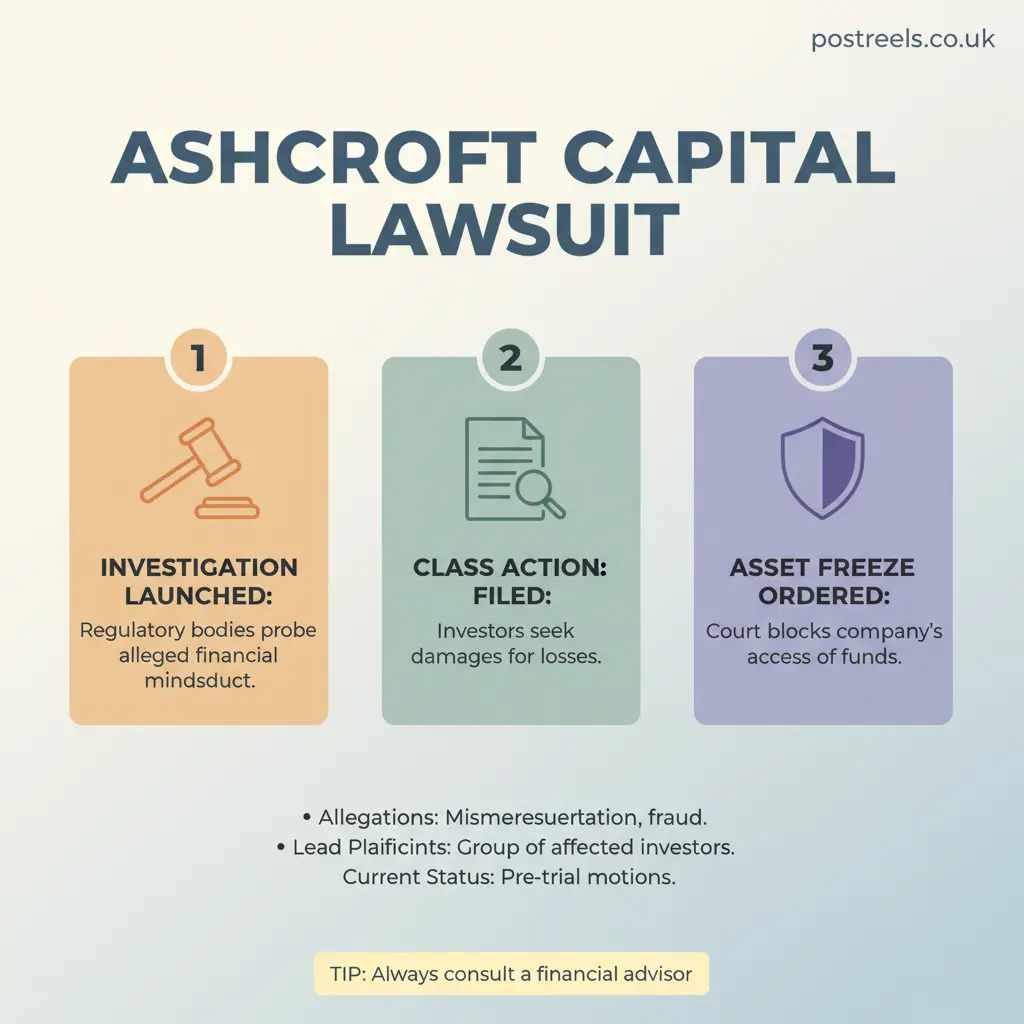
The Ashcroft capital lawsuit is a legal case filed by a group of investors who feel they were misled. At its core, the lawsuit alleges that Ashcroft Capital, a major player in the multifamily real estate world, didn’t play by the rules. The plaintiffs, which is just a legal term for the people suing, claim that the company painted a much rosier picture of their investments than what was actually happening.
Imagine buying a car because the dealer told you it gets 50 miles to the gallon and never breaks down. Then, six months later, it’s in the shop every week and only gets 15 miles per gallon. You would feel cheated, right? That is similar to how these investors feel. They put their trust and money into “Legacy Funds” expecting solid returns, but instead, they faced losses. The lawsuit claims that the company inflated return projections and didn’t tell investors about serious risks.
Specifically, the case, known as Cautero v. Ashcroft Legacy Funds, involves 12 accredited investors. These are people who typically have experience or high net worth, so they aren’t brand new to investing. They are claiming damages of over $18 million. They argue that Ashcroft Capital breached its fiduciary duty—which is a fancy way of saying they didn’t put the investors’ interests first.
Why Are Investors Suing Ashcroft Capital Now?
You might be wondering why this is blowing up right now. The Ashcroft capital lawsuit didn’t just appear out of nowhere. It is the result of years of mounting frustration. Back in 2019 and 2021, when the real estate market was hot, Ashcroft was marketing these funds aggressively. They promised high returns, often in the double digits.
However, the economy changed. Interest rates went up, and floating-rate debt became expensive. This squeezed the profits of many real estate firms. But the lawsuit alleges that Ashcroft didn’t just suffer from bad luck. Investors claim the company wasn’t transparent about how bad things were getting.
When distributions—the regular payments investors expect—stopped coming, people started asking questions. According to the lawsuit, the answers they got were vague or misleading. Then came the “capital calls.” This is when an investment firm asks investors for more money to save the property. For many, this was the final straw. They felt like they were throwing good money after bad, and that’s what led to the legal action in February 2025.
Did Ashcroft Capital Really Mislead Their Investors?
One of the biggest claims in the Ashcroft capital lawsuit is about misrepresentation. This means the investors believe they were sold a lie. The lawsuit states that Ashcroft inflated the Internal Rate of Return (IRR) projections by 4% to 6%. In the investment world, that is a huge difference. It can mean the difference between a great investment and a terrible one.
The investors also claim that Ashcroft hid the risks. Every investment has risk, but you need to know what they are before you sign the check. The plaintiffs say they weren’t told about the dangers of the variable-rate loans the company was using. These loans are like credit cards with adjustable rates; if interest rates go up, your payments skyrocket.
Furthermore, there are accusations about fees. Even when the properties were struggling and investors weren’t getting paid, Ashcroft allegedly kept collecting their management fees. This doesn’t sit well with investors who are losing money. It looks like the company was making sure they got paid, even if their clients didn’t. This behavior is a key part of the breach of fiduciary duty claim.
How Does a Capital Call Affect an Investor’s Wallet?
To understand the pain behind the Ashcroft capital lawsuit, you have to understand capital calls. A capital call happens when a syndicator (the company running the investment) says, “Hey, we are running out of money. We need everyone to chip in more cash to keep these properties afloat.”
For an investor, this is a nightmare scenario. You have already put in $50,000 or $100,000. Now, you get a letter saying you need to send another $10,000 or risk losing your share. If you can’t—or won’t—pay, your ownership percentage gets diluted. This means you own less of the pie than you did before.
In this case, the capital calls were supposedly used to pay for debt service caps and renovations that were over budget. Investors argue that if the company had been honest about the risks and managed the money better, these calls wouldn’t have been necessary. It forces investors into a corner: pay up or lose out. This financial pressure is a big driver behind the lawsuit.
What Is the Timeline of These Legal Events?
Keeping track of legal battles can be confusing. Here is a simple timeline to help you understand how the Ashcroft capital lawsuit unfolded:
| Year | Event | What Happened? |
|---|---|---|
| 2019-2021 | The Setup | Ashcroft markets “Legacy Funds” with promises of 15%+ returns. Money pours in. |
| 2022 | The Shift | Interest rates rise. Variable rate loans start costing more. Properties earn less. |
| 2023 | The Silence | Distributions to investors start getting delayed or paused. Communication becomes vague. |
| Jan 2024 | The Warning | Capital calls are issued. Investors are asked for more money to cover debts. |
| Feb 2025 | The Lawsuit | Cautero v. Ashcroft Legacy Funds is filed. 12 investors sue for $18M+ in damages. |
| Late 2025 | Discovery | Lawyers exchange documents and evidence. Depositions (interviews under oath) begin. |
| 2026 | Current Status | The case is ongoing. Settlement talks may be happening, but no final verdict yet. |
This timeline shows that the trouble didn’t happen overnight. It was a slow burn of economic changes mixed with alleged mismanagement that finally exploded into a legal battle.
Could This Be a Case of Bad Luck or Bad Management?
Ashcroft Capital’s defense is pretty standard for this type of case. They argue that the losses aren’t their fault—they are the economy’s fault. They point to the Federal Reserve raising interest rates at a historic pace. They say that no one could have predicted how fast rates would climb.
In their official response to the Ashcroft capital lawsuit, the firm emphasizes that all investments have risks. They claim that the offering documents—those long, boring PDFs that no one likes to read—contained all the necessary warnings. They argue that “forward-looking projections” are just guesses, not guarantees.
However, the plaintiffs disagree. They argue that professional managers get paid big fees specifically to manage these risks. They say that buying expensive rate caps or refinancing sooner were options that Ashcroft ignored. The court will have to decide: was this an unfortunate victim of the market, or was it negligence?
Real-Life Example: The “Value-Add” Trap
Let’s look at a common scenario in real estate syndication. A firm buys an older apartment complex. The plan is to renovate the kitchens and bathrooms, then raise the rent by $300 a month. This is called a “value-add” strategy.
But what if the renovations take twice as long because contractors are scarce? What if the tenants can’t afford the $300 increase? Suddenly, the apartments sit empty. The income drops, but the loan payments stay the same. If the loan has a variable rate, the payments might even go up. This is exactly the kind of trap that the Ashcroft capital lawsuit highlights. The plan looked great on paper, but the execution failed, and the investors are left holding the bag.
What Are the Possible Outcomes for Investors?
So, what happens next? If you are an investor watching the Ashcroft capital lawsuit, you are probably wondering if anyone is going to get their money back. There are a few ways this could end.
1. Settlement: This is the most likely outcome. Ashcroft might agree to pay a certain amount of money to the investors to make the lawsuit go away. This avoids a long, public trial. Usually, investors get pennies on the dollar—maybe 30% to 60% of what they lost.
2. Court Verdict: If it goes to trial and the investors win, the court could order Ashcroft to pay the full $18 million plus penalties. This sounds great, but it takes years. Plus, if Ashcroft doesn’t have the cash, a judgment is just a piece of paper.
3. Dismissal: The judge could throw the case out if Ashcroft proves they followed all the laws and the contracts protected them. In this case, investors get nothing and still have to pay their own legal fees.
4. SEC Intervention: If the government decides that securities laws were broken, the SEC could step in. This could lead to fines and a restitution fund for investors. This is serious business and usually happens only if there is proof of fraud.
How Can You Spot Red Flags in Future Investments?
The Ashcroft capital lawsuit is a hard lesson, but it can teach us how to be better investors. You don’t want to end up in this situation again. Here are some red flags to watch out for in real estate syndications.
- Guaranteed Returns: There is no such thing. If someone promises you 15% guaranteed, run away.
- Vague Communication: If you ask a specific question about debt or occupancy and get a fluffy answer, be suspicious.
- High Fees: Check the fee structure. If the sponsors get paid a lot even when the property loses money, their interests aren’t aligned with yours.
- Short Track Record: Everyone looks like a genius in a bull market. Look for sponsors who have survived a downturn before.
- Variable Rate Debt: In an uncertain economy, fixed-rate debt is safer. Be very careful with floating-rate loans.
Doing your homework—called “due diligence”—is boring, but it saves your wallet. Read the Private Placement Memorandum (PPM). Look at the “Risks” section carefully.
What Are Other Investors Saying About This?
You aren’t the only one reading about the Ashcroft capital lawsuit. Online forums like BiggerPockets and Reddit are buzzing with comments. It’s a mix of anger, fear, and “I told you so.”
Some users are sharing their own horror stories of stopped distributions. One user mentioned, “I thought I was diversifying, but now my capital is locked up indefinitely.” Another pointed out, “The communication stopped right when the checks stopped.”
These personal stories add a layer of reality to the legal documents. It’s not just about $18 million; it’s about retirement funds, kids’ college savings, and broken trust. The community sentiment is overwhelmingly negative right now, which damages Ashcroft’s reputation almost as much as the lawsuit itself.
How Does This Lawsuit Affect the Industry?
This case is bigger than just one company. The Ashcroft capital lawsuit is sending shockwaves through the entire real estate syndication industry. Other firms are watching closely.
If Ashcroft loses, it could set a precedent. It might mean that syndicators have to be much more careful about how they market their returns. We might see stricter rules about disclosures.
It also means that banks and lenders might look at these deals differently. They might require more cash reserves or stricter loan terms. For the average investor, this could mean that future deals offer lower projected returns—but hopefully, they will be more realistic and safer. The days of “easy money” in multifamily syndication might be over for a while.
Key Updates and Potential Payouts in the Ashcroft Capital Lawsuit
For investors closely following this legal battle, the latest Ashcroft Capital lawsuit update reveals that the case is currently in the discovery phase, meaning a final resolution could still be months away. Many stakeholders are particularly focused on the potential Ashcroft capital lawsuit payout, hoping to recover a portion of the millions allegedly lost due to inflated projections and undisclosed risks. While settlements are common in these types of disputes, the complexity of the Ashcroft Capital lawsuit—involving claims of fiduciary breaches and mismanagement—suggests that reaching an agreement may be a lengthy process as both sides present their evidence.
Key Takeaways
- The Core Issue: The Ashcroft capital lawsuit accuses the firm of misleading investors about returns and risks, leading to millions in losses.
- The Trigger: Rising interest rates exposed risky variable-rate loans, causing distributions to stop and triggering capital calls.
- The Allegations: Investors claim inflated projections, lack of transparency, and breach of fiduciary duty.
- The Defense: Ashcroft claims market conditions, not mismanagement, caused the losses and relies on contract disclaimers.
- The Lesson: Always scrutinize “guaranteed” returns, understand debt structures, and demand transparent communication before investing.
Frequently Asked Questions
1. Is my money safe if I invest with Ashcroft Capital?
It depends on which fund you are in. The lawsuit specifically targets the “Legacy Funds.” However, the reputational damage and financial strain on the company could affect operations across other funds. You should contact their investor relations department for specific updates on your holdings.
2. Can I join the Ashcroft capital lawsuit if I lost money?
Currently, the lawsuit is filed by a specific group of 12 investors. However, if the case gains traction, it could potentially turn into a class-action lawsuit. You should consult with a securities lawyer to see if you have a claim and what your options are.
3. What is a “capital call” and do I have to pay it?
A capital call is a demand for more money to cover expenses. If you don’t pay, your share of the investment usually gets diluted (reduced). You aren’t legally forced to pay, typically, but refusing to pay often means accepting a significant financial loss on your original investment.
4. How long will the Ashcroft capital lawsuit take to resolve?
Legal cases like this move slowly. It is currently in the discovery phase. A trial or settlement could happen in 2026, but it could drag on longer if there are appeals. Don’t expect a quick resolution.
5. Are all real estate syndications risky like this?
All investments carry risk, but not all syndications are managed the same way. Many sponsors use conservative debt and communicate well. This lawsuit highlights specific alleged failures in management and transparency, but it doesn’t mean every syndication is a scam. It just means you need to be careful.
Meta Title: Ashcroft Capital Lawsuit: 5 Critical Updates for Investors (2026)
Meta Description: Confused about the Ashcroft Capital lawsuit? We break down the allegations, the timeline, and what it means for your money in simple terms. Get the facts now.