


You might have stumbled across the name Charles Floate while looking for SEO tips, or maybe you saw a heated debate on Twitter. It’s a name that pops up a lot in the digital marketing world. But along with his name, you often see a big question mark. Is Charles Floate a scammer, or is he just a misunderstood marketing genius? It’s a valid question because his history is colorful, to say the least. From teenage hacking scandals to running high-level SEO agencies, his journey hasn’t been boring.
If you are thinking about buying his courses, hiring his agency, or just following his advice, you need the full picture. It’s easy to get lost in the noise of internet drama. Some people swear by his methods and claim he made them rich. Others warn you to stay far away. In this article, we are going to dig into the facts, look at his history, and help you decide for yourself. We aren’t here to take sides, but to lay out the information so you can make a smart choice for your business.
Who is Charles Floate, and Why Is He controversial?
To understand if is Charles Floate a scammer, you first need to know who he is. Charles Floate is a British entrepreneur and SEO expert who gained fame—and notoriety—at a very young age. He started out in the world of hacking before pivoting to Search Engine Optimization (SEO). His early years were marked by significant legal trouble, which we will discuss later, but this background gave him a unique perspective on how the internet works.
He built a brand around “Grey Hat” and “Black Hat” SEO. These are techniques that push the boundaries of Google’s rules. While “White Hat” SEO follows the rules strictly, Black Hat looks for loopholes to get faster results. This approach naturally makes people nervous. If you are a business owner in the US, you know that getting penalized by Google can destroy your income overnight. Charles has always been open about his aggressive tactics, which is part of why he is so controversial.
His bold personality also plays a huge role. He doesn’t sugarcoat things. He calls out other SEOs, criticizes Google openly, and shares case studies that seem too good to be true. This brash style attracts a lot of fans who love his honesty. But it also attracts critics who believe he is selling snake oil. When someone promises quick wins in an industry known for slow growth, eyebrows get raised.
The Early Hacking Days: Does a Criminal Past Matter?
One of the biggest reasons people ask is Charles Floate a scammer is his criminal record. When he was a teenager, Charles was involved in high-profile hacking incidents. He famously claimed involvement in attacks on the FBI and other government sites. This wasn’t just internet bragging; it led to real legal consequences in the UK. He avoided jail time but ended up with a suspended sentence and community service.
For many people, this is a major red flag. If someone was willing to break the law as a teenager, can you trust them with your business now? It is a fair question. However, others argue that he was just a kid making mistakes and that his hacking skills actually prove he knows the internet better than most. They see his transition from black hat hacking to SEO as a natural evolution of his skill set.
It is important to separate his past crimes from his current business. While hacking is illegal, providing SEO services is not. The question isn’t whether he was a criminal in the past—that is a fact. The question is whether his current business practices are honest. Does he deliver what he promises? Does he take money and run? These are the concerns that matter to a potential client today.
What Are the Main Accusations Against Him?
When you search “is Charles Floate a scammer,” you will find specific accusations. It’s not just vague hate; there are detailed complaints. One of the most common complaints comes from people who were hired by his previous agencies. Some clients claimed they paid for services that were never delivered or that the results were temporary. They say their rankings spiked for a month or two, only to crash when Google caught on to the aggressive tactics used.
Another accusation involves the rebranding of his agencies. Critics point out that he has operated under several different agency names over the years. In the business world, constantly changing your company name can look suspicious. It looks like you are trying to run away from bad reviews. If one agency gets a bad reputation, simply shutting it down and opening a new one is a common tactic used by scammers.
There are also stories about his courses. Some buyers felt the information provided was basic or outdated, not matching the high price tag. They felt the sales pitch promised “secret” techniques that turned out to be common knowledge. While dissatisfaction with a product doesn’t automatically make someone a scammer, it does contribute to the negative sentiment around his brand.
The “God of SEO” Era and Black Hat Tactics
Charles gained a lot of his following through his blog, “God of SEO.” This was where he shared his experiments with Black Hat SEO. He would show how he ranked websites for high-competition keywords using spammy links and automated content. At the time, these tactics worked incredibly well. People were amazed at how easily he could manipulate Google’s search results.
However, relying on these tactics is risky. When Google updates its algorithm, sites using these methods often get wiped out. People who followed his advice and got their sites penalized often felt cheated. They felt he didn’t adequately warn them about the risks. Is Charles Floate a scammer for teaching risky methods? That is a gray area. If he was honest about the risks, then it is the user’s responsibility. If he promised safety and delivered danger, that is different.
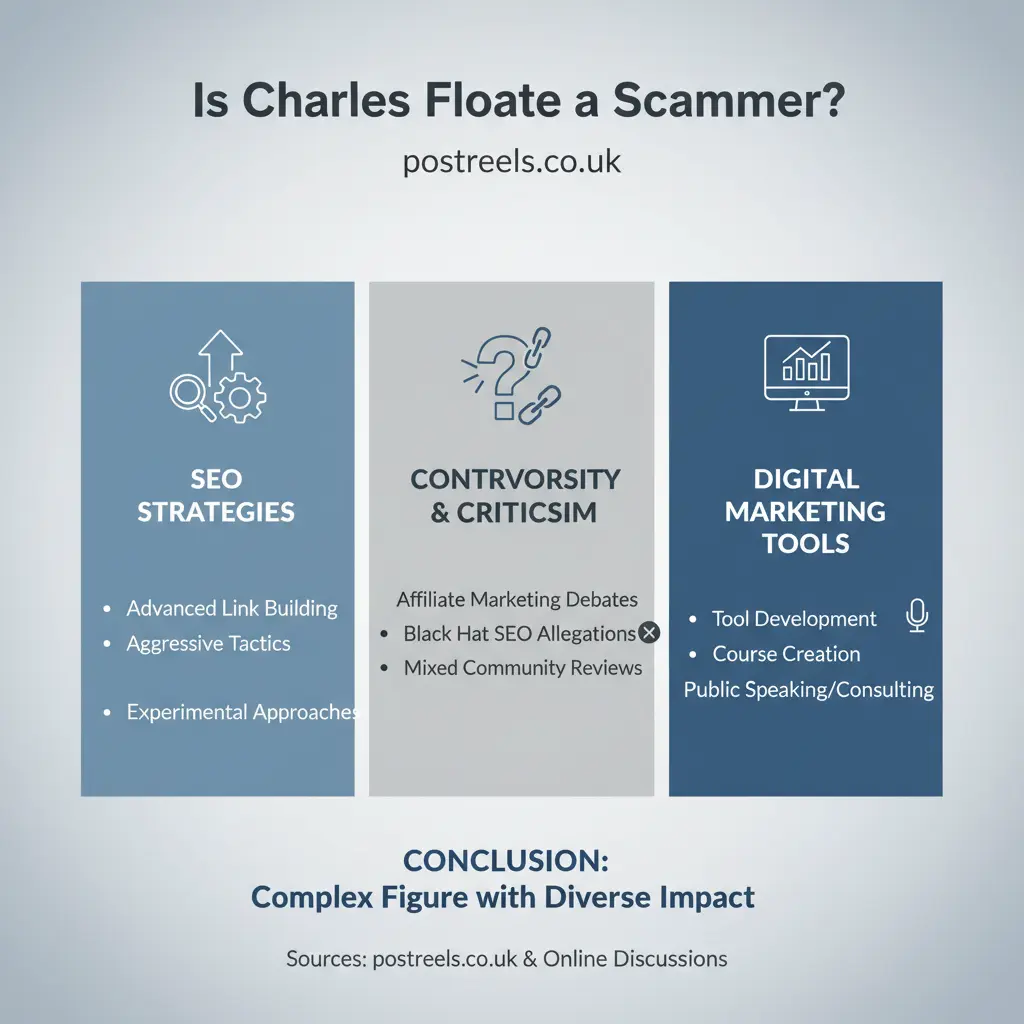
The “God of SEO” persona was intentionally arrogant. It was designed to get attention, and it worked. But it also set high expectations. When you call yourself a “God,” people expect miracles. When those miracles turn into penalties, the backlash is severe. This era cemented his reputation as someone who plays by his own rules, regardless of the consequences for others.
Understanding the Difference Between Bad Service and a Scam
It is crucial to define what a scam actually is. A scam is when someone takes your money with no intention of delivering the product or service. Bad service is when they try to deliver but fail, or the quality is poor. Many of the complaints about Charles Floate fall into the category of bad service or misaligned expectations rather than an outright scam.
For example, if you hire an SEO agency and rankings don’t improve, that sucks. You wasted money. But SEO is unpredictable. Even the best agencies fail sometimes. Unless they took the money and did zero work, it’s usually considered a business dispute, not a scam. Charles has undoubtedly had unhappy clients. But he also has clients who have seen great success. A true scammer rarely has long-term successful clients because they burn every bridge they cross.
Additionally, the digital marketing space is fierce. Competitors often write fake reviews or hit pieces to take down rivals. Some of the negative content you see might be exaggerated by people who just don’t like him personally. You have to filter through the noise to find the genuine customer experiences.
Does Charles Floate Have Successful Case Studies?
To be fair, we have to look at the other side of the coin. If the answer to “is Charles Floate a scammer” was a simple “yes,” he probably wouldn’t still be in business after a decade. Scammers usually have a short shelf life. Charles has been around for a long time and continues to speak at conferences, release courses, and run agencies.
He frequently publishes case studies showing massive traffic growth for his own sites and client sites. He shares screenshots of earnings and traffic graphs. While screenshots can be faked, he often does live walkthroughs or shares details that would be hard to fabricate. Many people in the SEO community respect his technical knowledge, even if they dislike his personality.
He has also shifted his focus in recent years. He talks more about “White Hat” link building and sustainable growth now. This pivot suggests he is trying to build a more legitimate, long-term business model. It shows maturity and an understanding that the old “churn and burn” tactics aren’t a viable career path forever. This shift has won him some new supporters who previously wrote him off.
How to Protect Yourself When Hiring SEO Gurus
Whether you are looking at Charles Floate or any other “guru,” you need to protect yourself. The internet is full of people promising to make you rich. Never take their word for it. Always do your own due diligence. If you are a small business owner in Ohio or Texas, hiring a remote consultant is risky. You need safeguards.
First, look for verifiable third-party reviews. Don’t just read the testimonials on their own website; those are cherry-picked. Look at Trustpilot, Google Reviews, or discussions on forums like Reddit. See what real people are saying in real-time. Second, ask for references. A legitimate agency should be happy to let you speak to a current or past client.
Finally, be wary of guarantees. No one can guarantee a #1 ranking on Google. If someone promises you that, run away. SEO is a game of probabilities, not certainties. Legitimate experts promise work, strategy, and effort, but they never promise specific rankings because they don’t control the algorithm.
Is His Training Worth the Money?
Charles sells various training courses on SEO and link building. The question often comes up: are they worth it? The answer depends on your experience level. Beginners often find his content overwhelming because he dives deep into technical details quickly. Advanced SEOs often find value in his unique strategies and experiments.
If you are expecting a “push button, get money” system, you will be disappointed. His methods usually require hard work, investment, and risk tolerance. People who call him a scammer often bought a course expecting easy money and realized actual work was involved.
However, value is subjective. If you pay $500 for a course and learn one tip that makes you $5,000, it was worth it. If you learn nothing new, it feels like a rip-off. Most independent reviews suggest his training contains solid, actionable info, but it is often disorganized or delivered in a rough, unpolished style. You aren’t paying for high production value; you are paying for the raw information.
The Reality of “Grey Hat” SEO Risks
A huge part of the controversy comes down to the methods he teaches. “Grey Hat” SEO is not illegal, but it violates Google’s terms of service. This means if you get caught, Google can remove your website from search results. Charles is an expert in these methods. He buys links, uses private blog networks (PBNs), and manipulates signals.
When he teaches these methods, he is handing you a loaded gun. You can use it to hunt for dinner, or you can shoot yourself in the foot. Is Charles Floate a scammer for selling you the gun? Most would say no, provided he told you it was dangerous. The problem arises when beginners don’t understand the magnitude of the risk.
If you are a corporate brand like Nike or a local dentist, you should probably stay away from these tactics. The risk is too high. But if you are an affiliate marketer building niche sites, these tactics are standard practice. Context matters. Charles caters largely to that aggressive affiliate market, where risk is just part of the game.
Key Takeaways about “Is Charles Floate a Scammer”
- Controversial Past: Charles has a history of hacking and legal trouble, which fuels mistrust.
- Aggressive Tactics: He specializes in Grey/Black Hat SEO, which carries a high risk of penalties.
- Mixed Reviews: There are legitimate complaints about service delivery, but also many success stories.
- Not a Simple Scam: While he has unhappy clients, evidence suggests a legitimate business operation, not a “take the money and run” scheme.
- Due Diligence: Always research thoroughly before hiring him or buying his courses.
Conclusion of “Is Charles Floate a Scammer”
So, is Charles Floate a scammer? Based on the evidence, the label “scammer” doesn’t quite fit in the traditional sense. He isn’t a Nigerian prince emailing you for bank details. He is a high-risk, high-reward service provider in a volatile industry. He delivers information and services that work for some but fail for others. His past is sketchy, and his business practices can be aggressive, but he clearly possesses deep knowledge of SEO.
If you are risk-averse, he is not for you. If you want safe, slow, corporate growth, look elsewhere. But if you are in the affiliate game and understand the risks of Grey Hat SEO, he is a resource worth looking at. Ultimately, the responsibility lies with you. Don’t invest money you can’t afford to lose, and don’t believe in magic buttons.
FAQs about “Is Charles Floate a Scammer”
Is Charles Floate a scammer, according to online reviews?
Online reviews are mixed. You will find threads on forums accusing him of poor service or unethical behavior, but you will also find verified testimonials from people who have learned a lot from him. It is a polarized reputation.
Can I get a refund if I don’t like his course?
Refund policies vary by product. Generally, digital products are hard to refund once accessed. Always check the specific terms and conditions on his sales page before clicking buy. Do not assume you can get your money back easily.
Is his SEO agency safe for my business?
If you run a legitimate, long-term business, be very careful. His agencies often use aggressive link-building tactics. While these can boost rankings fast, they can also lead to penalties. Make sure you discuss the specific strategies they will use before signing a contract.
Why does he change agency names so often?
Critics say it is to hide bad reviews. Charles might argue it is for business restructuring or different partnerships. It is a common red flag in the industry, so it is worth asking him about directly if you speak to his sales team.
Does Charles Floate actually know SEO?
Yes, there is no doubt he knows the technical side of SEO very well. Even his biggest critics admit he is smart. The debate is about his ethics and business delivery, not his raw intelligence or understanding of search algorithms.