


When you order an Uber, you expect the person in the app to be the person behind the wheel. But what happens if they’re not? This issue of a “backup driver” creates a complicated situation, especially if an accident occurs. Understanding the rules around backup driver uber accident liability is crucial for any passenger. The person driving the car directly impacts insurance coverage, who pays for damages, and your rights as a rider. If the driver isn’t the one registered with Uber, you could face significant challenges getting compensation for your injuries.
This guide will break down everything you need to know. We will explore what a backup driver is, how Uber’s insurance policies work, and who is held responsible when things go wrong. Knowing these details can help you protect yourself and navigate the complex claims process that follows a rideshare accident involving an unauthorized driver.
Key Takeaways
- Uber does not have an official “backup driver” policy for passenger trips. The driver must match the profile in the app.
- If an unauthorized driver causes an accident, Uber’s commercial insurance may not apply, shifting liability to personal auto policies.
- The driver’s status in the app (offline, waiting for a ride, or on a trip) determines which insurance policy is active.
- Documenting everything after a crash, especially the driver’s identity and trip details, is essential for your claim.
- Navigating these claims can be complex, and legal guidance is often necessary to secure fair compensation.
What is a “Backup Driver” in the Context of Uber?
When we talk about a “backup driver” for Uber, it’s not an official role. Uber’s platform is built on a one-to-one relationship: the driver who is vetted and approved is the only person authorized to transport passengers. A backup driver is anyone else operating the vehicle during a trip. This could be a friend, a family member, or someone co-using the car to make money. They have not passed Uber’s background checks or been approved to drive on the platform.
This unauthorized substitution is a direct violation of Uber’s terms of service. The company’s safety features, like sharing your trip status with loved ones, rely on knowing who is behind the wheel. When the driver doesn’t match the app, those safety measures are compromised. This is why you should always verify the driver’s name, photo, and license plate before getting into the car. If anything seems off, you should cancel the ride and report the issue to Uber.
How Does Uber’s Insurance Work for Authorized Drivers?
Uber provides a robust insurance plan, but it only applies under specific conditions and for authorized drivers. The coverage is tiered based on what the driver is doing at the time of an incident. Understanding these tiers is the first step in figuring out liability.
- Period 1: App is Off
When the driver’s Uber app is off, they are considered to be driving for personal reasons. In this case, only their personal auto insurance policy applies to any accident. Uber’s insurance provides no coverage at all. - Period 2: App is On, Waiting for a Ride Request
Once a driver logs into the app and is available to accept trips, a limited level of Uber’s insurance kicks in. This is contingent coverage, meaning it only applies if the driver’s personal insurance doesn’t cover the damages. This typically includes liability coverage for injuries or property damage they cause to others. - Period 3: En Route to Pick Up or During a Trip
This period begins the moment a driver accepts a ride request and ends when the passenger is dropped off. During this time, Uber’s full commercial insurance policy is active. This includes $1 million in third-party liability coverage and $1 million in uninsured/underinsured motorist (UM/UIM) coverage. This is the policy that protects passengers.
Uber Insurance Coverage by Driver Status
| Driver Status | Applicable Insurance | Typical Coverage Limits |
|---|---|---|
| App Off | Driver’s Personal Auto Insurance | Varies by personal policy |
| App On, Waiting for Ride | Uber’s Contingent Liability | $50,000/person bodily injury, $100,000/accident, $25,000 property damage |
| On Trip with Passenger | Uber’s Commercial Insurance | $1,000,000 Third-Party Liability & $1,000,000 UM/UIM Coverage |
Who is Liable if a Backup Driver Causes an Accident?
This is where things get incredibly complicated. If an unauthorized “backup” driver causes a crash, the central question for insurers is whether the driver was authorized to be operating the vehicle for Uber. Because they are not the verified individual, Uber’s insurance provider has strong grounds to deny the claim. They can argue that the trip was not conducted in accordance with their safety policies, voiding the commercial coverage.
In this scenario, the financial responsibility typically shifts. The first place to look for compensation would be the backup driver’s personal auto insurance policy. However, many personal policies have a “business-use exclusion,” which means they won’t cover accidents that happen while driving for a commercial purpose like a rideshare service. This can leave an injured passenger with very few options. An example of this occurred in a Chicago case where a passenger was injured by an unauthorized driver. The insurance claim was initially denied by Uber’s carrier, forcing the passenger’s attorney to pursue the driver’s personal policy, which then also tried to deny the claim based on the business-use exclusion.
What Happens if the Uber Self-Driving Backup Driver Causes an Accident?
The issue of an uber self driving backup driver causes accident liability insurance introduces another layer. In the context of autonomous vehicles, the “backup driver” is a human safety operator tasked with monitoring the system and taking control if needed. Their role is fundamentally different from an unauthorized driver in a standard Uber. If this safety operator is negligent and causes a crash, liability becomes a complex mix.
The uber autonomous backup driver accident liability would likely fall on Uber or its autonomous vehicle subsidiary. These companies are testing developmental technology and are generally considered responsible for the system’s failures, including human operator error. A famous case involved an Uber autonomous test vehicle in Arizona that resulted in a fatality. The investigation focused on the safety driver’s inattention and the vehicle’s system failures, ultimately pointing to corporate responsibility. The uber autonomous vehicle backup driver liability when causes accident is a legal gray area, but the company behind the technology is almost always the primary target in a lawsuit.
Does Uber’s Policy Cover Accidents Caused by a Backup Driver?
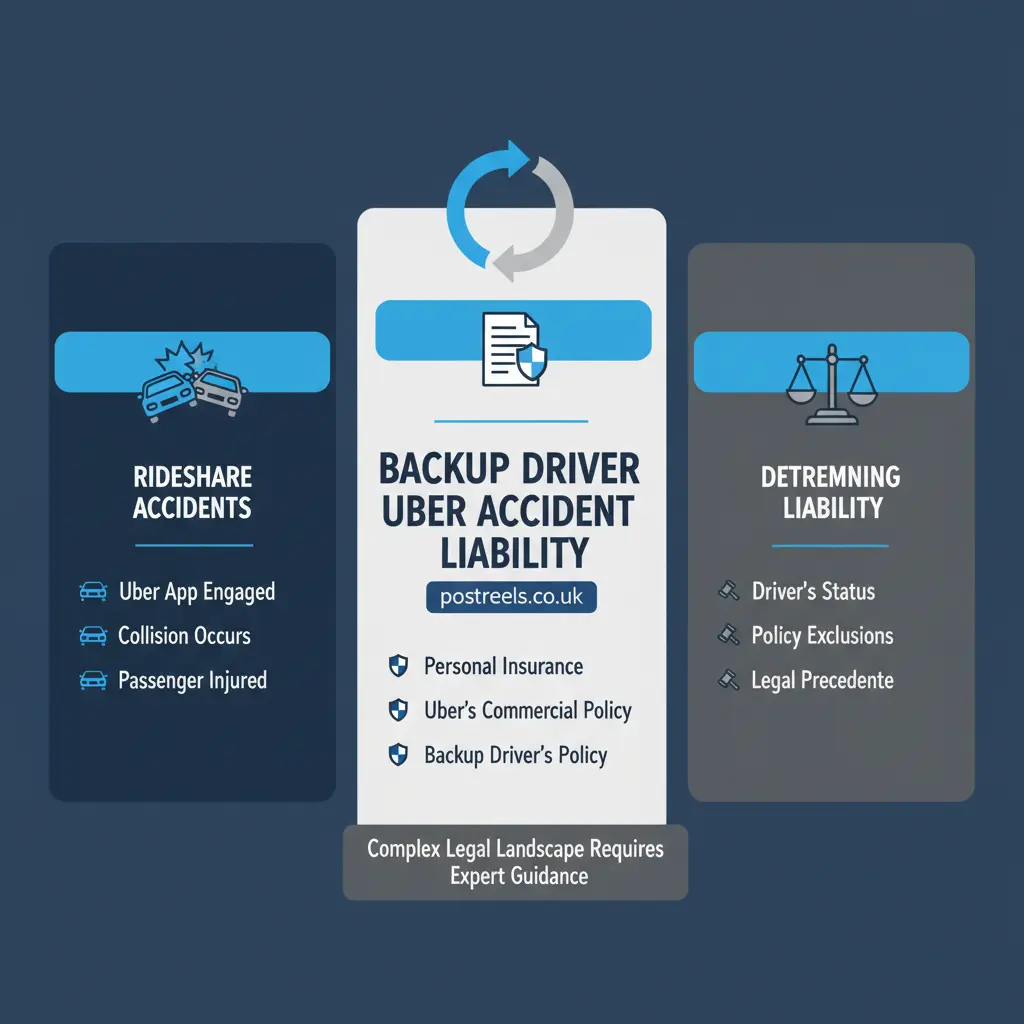
Generally, no. The uber backup driver causes accident liability backup driver uber policy is designed for the authorized driver only. When a passenger gets into a vehicle with a driver who does not match the app profile, they are stepping into a situation where Uber’s commercial insurance likely won’t apply. The contract between Uber and its drivers is specific to the individual who passed the screening process.
If a claim is filed, the insurance adjuster’s first step is to verify the identity of the driver involved in the crash against the account details for the trip. If there is a mismatch, a denial is highly probable. This protects Uber from liability for the actions of unvetted individuals using its platform. It forces the injured party to seek compensation from the driver’s personal insurance or file a lawsuit directly against the at-fault driver. This makes understanding the uber backup driver accident liability critical before you even get in the car.
What Should I Do Immediately After an Accident with a Backup Driver?
Your actions in the moments after a crash can significantly impact your ability to get compensation. If you’ve been in an accident involving a suspected backup driver, follow these steps:
- Ensure Everyone’s Safety: Check yourself and others for injuries. If possible, move to a safe location away from traffic.
- Call 911: Request medical assistance and the police. A police report is an official record of the incident and is vital for any insurance claim or lawsuit. Tell the officer exactly what happened.
- Document Everything:
- Take a screenshot of your Uber trip screen. This shows the authorized driver’s name, photo, and vehicle information.
- Take photos of the driver who was actually behind the wheel.
- Photograph the license plates of all vehicles involved.
- Capture images of the vehicle damage and the accident scene from multiple angles.
- Gather Information: Collect the name, contact information, and insurance details from the person who was driving, even if they are not the authorized Uber driver. Also, get contact information from any witnesses.
- Seek Medical Attention: Even if you feel fine, go to a doctor or an urgent care clinic. Some injuries, like whiplash or concussions, may not show symptoms for hours or days. Medical records create a direct link between the accident and your injuries.
- Report the Incident to Uber: Use the app to report the accident and specify that the driver did not match the profile. This creates an official record with the company.
Can I Sue Uber Directly for an Accident Caused by a Backup Driver?
Suing Uber directly is very difficult. Uber classifies its drivers as independent contractors, not employees. This classification shields the company from direct liability for its actions in many situations. When the driver is unauthorized, the legal argument against Uber becomes even weaker. You would have to prove that Uber was negligent in a way that allowed the unauthorized driver to use the platform.
For example, if you could show that the account had been reported for driver-switching multiple times and Uber failed to take action, you might have a negligence case. However, this is a high legal bar to clear. More often, the legal strategy focuses on pursuing claims against the at-fault driver’s personal insurance and leveraging your own UM/UIM coverage if necessary.
How Does a Backup Driver Affect My Insurance Claim?
A backup driver complicates every step of the claims process. Instead of a straightforward claim against Uber’s commercial policy, you may find yourself in a multi-front battle.
- Initial Denial: Expect an initial denial from Uber’s insurance carrier.
- Personal Policy Issues: The backup driver’s personal insurer may deny the claim due to a business-use exclusion.
- Your Own Insurance: You may need to file a claim with your own insurance company under your UM/UIM coverage. This coverage is designed to protect you if the at-fault driver is uninsured or underinsured, which could be the case here.
- Legal Action: You may have to file a lawsuit against the backup driver directly to recover damages.
This is not a process you should handle alone. The complexities of uber backup driver accident liability require expert legal knowledge to navigate successfully.
Final Thoughts
The convenience of ridesharing comes with unique risks, and the issue of backup drivers is one of the most serious. An accident with an unauthorized driver can leave you with significant injuries and a mountain of bills, all while insurance companies deny responsibility. Always verify your driver’s identity before starting a trip. If you are injured in an accident involving a backup driver, your best course of action is to document everything and consult with an attorney experienced in rideshare accident liability. They can help you understand your options and fight for the compensation you deserve.
Frequently Asked Questions (FAQs)
What if the backup driver wasn’t at fault for the accident?
If another vehicle was at fault for the crash, you would file a claim against that driver’s insurance policy. In this situation, the fact that your Uber had a backup driver might be less critical to your claim against the third party. However, if the at-fault driver is uninsured or underinsured, you would typically turn to Uber’s UM/UIM policy. The presence of a backup driver could still complicate this, as Uber’s insurer may argue their policy was not active for the trip.
Does my personal health insurance cover injuries from the accident?
Yes, your personal health insurance can be used to pay for your medical treatment initially. However, your health insurer will likely seek reimbursement from any settlement you receive from an auto insurance company. This process is called subrogation. An attorney can help manage this process to ensure your medical bills are handled correctly.
What does the Uber help backup driver contract say?
Uber’s contract is with the approved individual, and it strictly prohibits unauthorized drivers from using the account to transport passengers. There is no such thing as an “Uber help backup driver contract.” Any arrangement between an approved driver and a backup driver is a private one that violates Uber’s terms of service and can lead to deactivation of the account.
How long do I have to file a claim for a backup driver accident?
The time limit to file a lawsuit, known as the statute of limitations, varies by state. In most states, you have between one to three years from the date of the accident to file a personal injury claim. It is crucial to act quickly, as missing this deadline can prevent you from ever recovering compensation.