


The Kellogg Innovation Network, often called KIN, is a unique platform that brings together bright minds from different fields. It connects leaders from business, government, non-profits, and academia at Northwestern University to solve tough problems and spark new ideas. Think of it as a super-group for innovation. Since its inception in 2003, KIN has helped organizations grow by focusing on creative strategies and collaboration. This network isn’t just about talk; it’s about action. It provides the tools, connections, and environment needed for big ideas to take root and flourish, helping companies stay ahead in a fast-changing world. Whether you’re a startup founder or a leader at a major corporation, understanding what KIN does can offer valuable insights.
This article will explore the Kellogg Innovation Network, what makes it special, and how it helps businesses and leaders succeed. We will look into its programs, the benefits of joining, and real-world examples of its impact.
What Exactly Is the Kellogg Innovation Network?
The Kellogg Innovation Network (KIN) is a special initiative by the Kellogg School of Management at Northwestern University. Its main goal is to create a space where leaders can work together to drive innovation. It’s not a typical business conference or a simple networking group. Instead, it is an active community. This community includes Kellogg faculty, CEOs of major companies, entrepreneurs, and leaders from non-profits and government agencies. They all come together to share knowledge, discuss challenges, and develop strategies for growth.
The network was founded on the idea that the best solutions come from collaboration. By bringing people with different backgrounds and perspectives together, KIN creates a powerful environment for creative problem-solving. This approach helps members tackle complex issues that no single organization could solve on its own. The network facilitates these interactions through summits, forums, and expeditions, creating ongoing dialogue and partnership opportunities.
How Does KIN Foster a Culture of Innovation?
KIN fosters a culture of innovation by creating an environment built on trust and open dialogue. It encourages participants to step outside their usual corporate structures and think differently. One key method is through its highly interactive events. Unlike traditional conferences, where you just listen to speakers, KIN events are designed for active participation. Attendees work in small groups, join workshops, and engage in candid conversations about real-world problems. This setup breaks down barriers and helps build genuine relationships.
For example, a tech CEO might find themselves brainstorming with a non-profit leader and a government official. This cross-pollination of ideas often leads to surprising insights. The network also promotes a “fail forward” mentality. Participants are encouraged to experiment with new ideas in a safe space, where learning from failure is seen as a crucial part of the innovation process. This supportive atmosphere empowers leaders to take calculated risks they might avoid in their own organizations.
What Are the Key Programs Offered by KIN?
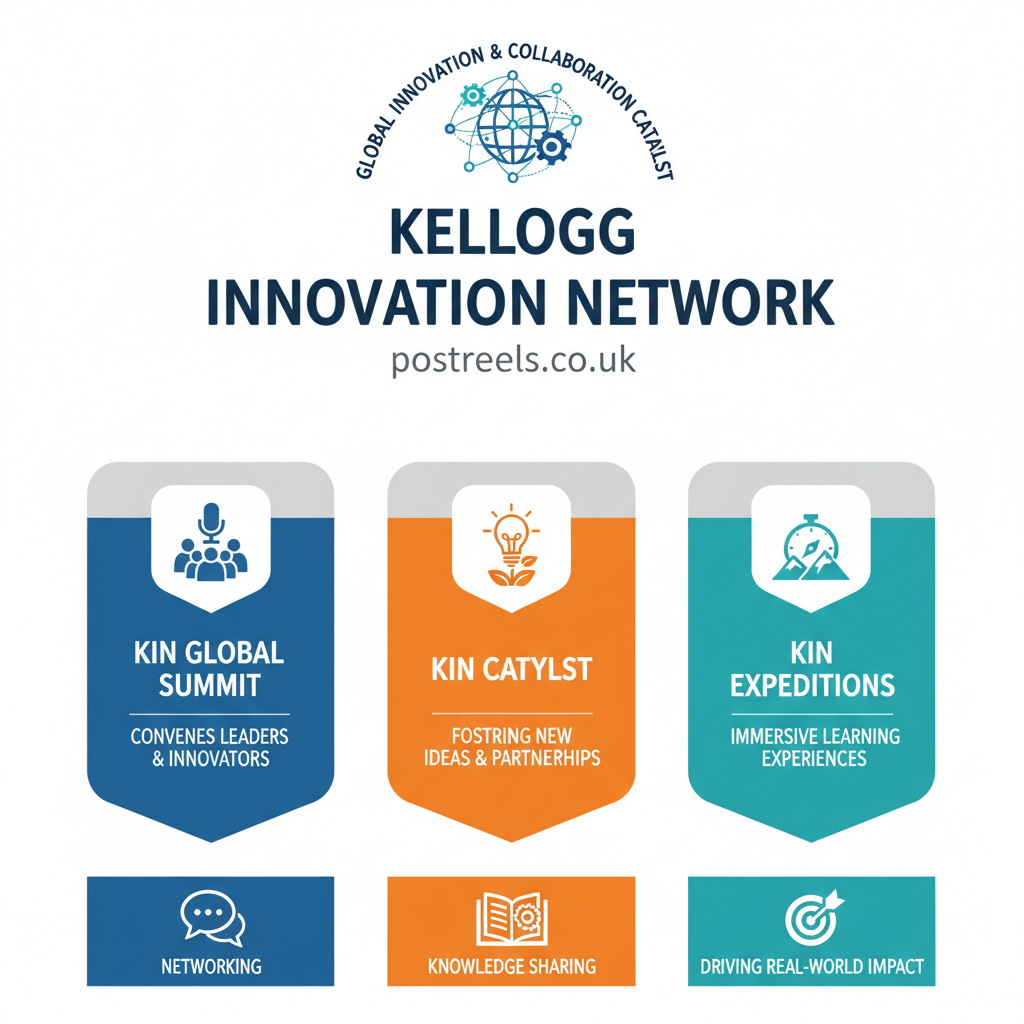
The Kellogg Innovation Network runs several distinct programs, each designed to foster collaboration and growth uniquely. These programs form the backbone of the network’s activities and provide multiple ways for members to engage.
- KIN Global Summit: This is the network’s flagship annual event. It brings together the entire KIN community for several days of intense discussion, workshops, and networking. The summit focuses on major global challenges and opportunities, with themes that change each year to stay relevant. It’s a place where big ideas are born, and major collaborations are initiated.
- KIN Catalyst: These are smaller, more focused events that happen throughout the year. A KIN Catalyst might concentrate on a specific industry, like healthcare, or a particular challenge, such as supply chain sustainability. These events allow for deeper dives into niche topics and facilitate problem-solving among experts in a particular field.
- KIN Expeditions: These are immersive trips that take members to innovation hotspots around the world. For instance, KIN has led expeditions to places like Israel to study its “Start-up Nation” ecosystem. These trips provide firsthand experience and deep insights into how innovation thrives in different cultural and economic contexts.
Who Can Join the Kellogg Innovation Network?
Membership in the Kellogg Innovation Network is typically by invitation only. The network carefully curates its community to ensure a diverse mix of leaders who are committed to innovation and collaboration. The goal is to bring together individuals from various sectors, including corporate executives, successful entrepreneurs, academic thought leaders, and influential figures from non-profits and government. This diversity is central to KIN’s philosophy, as it believes that breakthrough ideas often come from the intersection of different fields and perspectives.
While there isn’t a public application form, individuals who are leaders in their fields and demonstrate a passion for driving positive change can become part of the network. Often, existing members will nominate new participants whom they believe can contribute to and benefit from the community. The Kellogg Innovation Network at Northwestern University focuses on quality over quantity, building a close-knit group of innovators, often referred to as “KINians.”
What Benefits Do Members Get from KIN?
Joining the Kellogg Innovation Network provides members with a wide range of benefits that go far beyond typical networking. One of the primary advantages is access to a trusted circle of peers. Members can have honest conversations about their biggest challenges without fear of judgment. This peer support system is invaluable for leaders navigating complex business landscapes. Another key benefit is exposure to cutting-edge ideas and research from the Kellogg School of Management and other leading institutions.
Members also gain practical tools and frameworks to drive innovation within their own organizations. Through workshops and collaborative sessions, they learn new methods for problem-solving, strategy development, and leading change. Furthermore, the network opens doors to unique partnership opportunities. A connection made at a KIN event could lead to a joint venture, a new business, or a solution to a pressing social issue.
How Does KIN Compare to Traditional Business Networks?
The Kellogg Innovation Network differs significantly from traditional business networks. The table below highlights some key distinctions.
| Feature | Traditional Business Networks | Kellogg Innovation Network (KIN) |
|---|---|---|
| Primary Goal | Networking and lead generation | Collaborative problem-solving and innovation |
| Membership | Often open, focused on industry | Curated, by-invitation, cross-sector |
| Event Format | Speaker-focused presentations | Interactive workshops and peer discussions |
| Focus | Short-term transactions | Long-term relationships and value creation |
| Culture | Formal and transactional | Open, trusting, and collaborative |
| Outcomes | Business cards and sales leads | Actionable strategies and partnerships |
While traditional networks certainly have their place, KIN offers a deeper, more collaborative experience. For example, instead of just hearing a speech about sustainability, KIN members might work together to design a practical, sustainable supply chain model for a real company. This hands-on, action-oriented approach is what truly sets it apart. The focus is less on “what you can get” and more on “what we can build together.”
What were the highlights from Past KIN Events?
Over the years, the Kellogg Innovation Network has hosted many memorable events. The gatherings from the Kellogg Innovation Network 2015, Kellogg Innovation Network 2017, and Kellogg Innovation Network 2018 were particularly notable for their focus on emerging technologies and global shifts. For instance, the Kellogg Innovation Network 2015 summit explored the impact of the digital economy on traditional industries. Participants discussed how companies could adapt to disruptive forces like AI and the Internet of Things.
In 2017, a major theme was the future of work. The Kellogg Innovation Network 2017 event brought leaders together to debate how automation would reshape jobs and what skills would be most valuable in the coming decades. A case study presented involved a manufacturing company in Ohio that successfully retrained its workforce for robotics, offering a hopeful model for others. The Kellogg Innovation Network 2018 summit focused on global prosperity and how businesses could play a role in addressing social inequalities, featuring deep dives into financial inclusion and healthcare access.
How Does KIN Address Real-World Challenges?
KIN directly tackles real-world challenges by applying its collective brainpower to specific problems. One powerful example is its work on sustainable agriculture. A few years ago, KIN brought together food producers, technology experts, and environmental scientists to address food scarcity. A team worked on a project to help small-scale farmers in a developing country use mobile technology to access weather data and market prices. This simple solution dramatically improved their crop yields and income.
In another instance, KIN facilitated a collaboration between healthcare providers and tech companies to improve patient data management. A hospital in a major U.S. city was struggling with fragmented electronic health records. Through a KIN Catalyst event, hospital leaders connected with a startup specializing in data integration. They co-developed a new platform that streamlined patient information, reduced medical errors, and improved care coordination. This is a perfect example of how KIN moves beyond theory to create tangible, positive impact.
What Is the Future Vision for the Kellogg Innovation Network?
Looking ahead, the Kellogg Innovation Network aims to expand its influence and continue tackling the world’s most pressing challenges. A key focus for the future is leveraging technology to connect its global community more effectively. This includes creating virtual collaboration spaces and digital tools that allow members to work together year-round, not just during scheduled events. The network also plans to deepen its focus on topics like climate change, social equity, and ethical AI.
The vision is for KIN to become an even more powerful engine for positive change. It seeks to not only help businesses innovate but also to contribute to building a more sustainable and equitable world. This involves strengthening its partnerships with governments and non-profits to ensure that the solutions developed within the network have a broad societal impact. The Kellogg Innovation Network at Northwestern University will continue to evolve, staying true to its core mission of bringing great minds together to build a better future.
Key Takeaways
- The Kellogg Innovation Network (KIN) is a collaborative platform from Northwestern’s Kellogg School of Management, connecting leaders from business, government, and non-profits.
- It operates through exclusive programs like the KIN Global Summit, focused KIN Catalyst events, and immersive KIN Expeditions.
- Membership is by invitation, creating a curated, diverse community focused on trust and open collaboration.
- Benefits include access to a trusted peer network, cutting-edge research, and unique partnership opportunities.
- KIN differentiates itself from traditional networks by focusing on long-term value creation and collaborative problem-solving rather than short-term transactions.
- The network has a history of tackling real-world issues, from digital disruption in 2015 to global prosperity in 2018.
- Real-life examples of its impact include improving agricultural outcomes with technology and streamlining patient data in healthcare.
- The future vision for KIN involves using technology to enhance global collaboration and deepening its focus on major societal challenges like climate change and social equity.
Frequently Asked Questions (FAQs)
1. What is the Kellogg Innovation Network?
The Kellogg Innovation Network (KIN) is a platform created by the Kellogg School of Management at Northwestern University. It brings together leaders from different sectors to collaborate on innovation, strategy, and complex global challenges.
2. How can I join the Kellogg Innovation Network?
Membership is typically by invitation to ensure a diverse and committed group of leaders. The network seeks executives, entrepreneurs, and innovators who are leaders in their fields. There is no formal public application process.
3. What kind of events does KIN host?
KIN hosts several types of events, including the annual KIN Global Summit, smaller KIN Catalyst forums on specific topics, and KIN Expeditions to global innovation hubs.
4. What industries benefit most from KIN?
KIN is cross-industrial and benefits a wide range of sectors, including technology, healthcare, finance, consumer goods, manufacturing, and the non-profit sector. Its strength lies in bringing these diverse industries together.
5. How is KIN different from other executive networks?
KIN focuses on deep collaboration and long-term value creation rather than simple networking. Its curated, cross-sector community and interactive, problem-solving format make it a unique environment for innovation.