


What Is Alaskan Seiti and Why Is It Becoming So Popular?
If you’ve recently seen the term alaskan seiti on seafood packaging or restaurant menus, you may wonder whether it’s a different species from Alaska pollock. The answer is simple: alaskan seiti is the Nordic and European name commonly used for Alaska pollock, scientifically known as Gadus chalcogrammus.
This cold-water whitefish belongs to the cod family and thrives in the nutrient-rich waters of the North Pacific Ocean, especially around Alaska, the Bering Sea, and the Gulf of Alaska.
In recent years, Alaskan seiti has gained attention among health-conscious consumers because it offers a rare combination of affordability, sustainability, excellent nutrition, and culinary versatility. Whether you’re looking for a high-protein seafood option, a sustainable fish choice, or a family-friendly meal ingredient, this fish checks many boxes.
What Is the Difference Between Alaskan Seiti and Alaska Pollock?
There is no biological difference.
Alaskan seiti and Alaska pollock refer to the same fish species:
| Common Name | Scientific Name | Region |
| Alaskan Seiti | Gadus chalcogrammus | Nordic and European markets |
| Alaska Pollock | Gadus chalcogrammus | United States and Canada |
| Walleye Pollock | Gadus chalcogrammus | Scientific and commercial use |
| Pacific Pollock | Gadus chalcogrammus | Seafood industry terminology |
The confusion exists because different countries use different market names. In Finland and several European countries, “seiti” is commonly used on seafood labels, while Americans typically know it as Alaska pollock.
Where Does Alaskan Seiti Come From?
Alaskan seiti is primarily harvested from the cold waters of:
- Bering Sea
- Gulf of Alaska
- North Pacific Ocean
- Aleutian Islands region
These nutrient-rich waters support healthy fish stocks and create ideal conditions for sustainable commercial fisheries.
Because pollock reproduces efficiently and fisheries are carefully monitored, populations remain relatively stable compared to many other commercial fish species.
Scientific Classification
| Category | Classification |
| Kingdom | Animalia |
| Phylum | Chordata |
| Class | Actinopterygii |
| Order | Gadiformes |
| Family | Gadidae |
| Species | Gadus chalcogrammus |
The fish belongs to the same cod family as Atlantic cod and haddock.
What Does Alaskan Seiti Taste Like?
One reason Alaskan seiti is so widely consumed is its approachable flavor.
Flavor Profile
- Mild taste
- Slightly sweet undertones
- No strong fishy odor
- Clean finish
Texture
- Soft white flesh
- Delicate flakes
- Moist when cooked properly
- Easily absorbs seasonings
This makes it ideal for people who normally avoid stronger-tasting seafood.
Personal Cooking Observation
Many home cooks discover that alaskan seiti works exceptionally well in air fryer recipes. Unlike some oily fish, it develops a crispy exterior while remaining tender inside. This makes it a reliable option for quick weeknight meals.
What Nutrients Does Alaskan Seiti Provide?
One of the biggest reasons dietitians recommend Alaska pollock is its nutrient density.
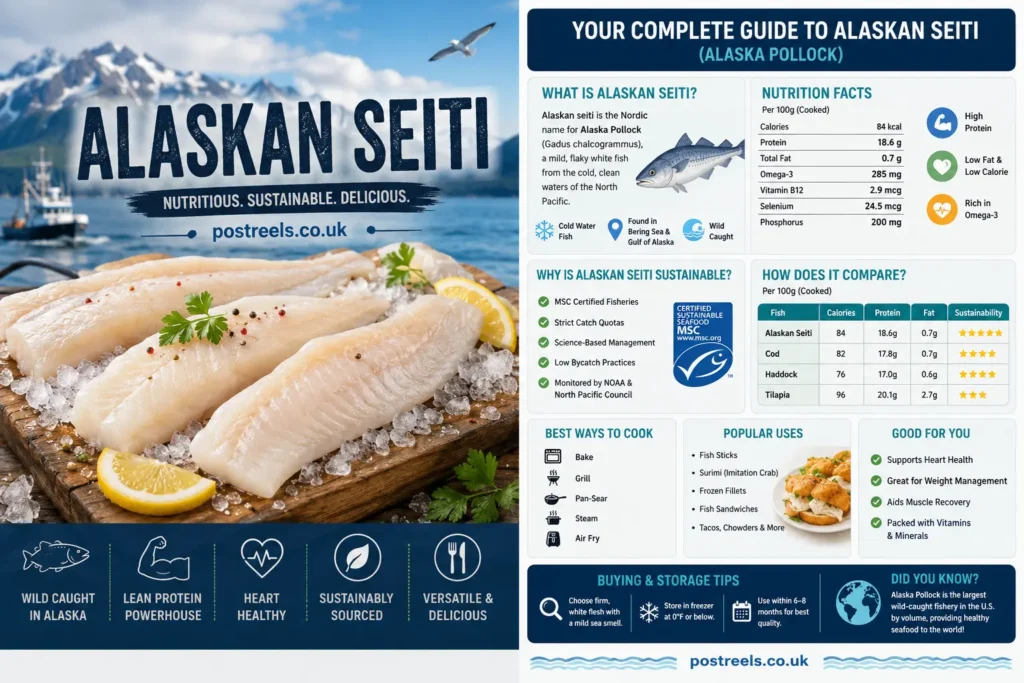
Alaskan Seiti Nutrition Table (Per 100g Cooked Serving)
| Nutrient | Approximate Amount |
| Calories | 90 |
| Protein | 20g |
| Total Fat | 1g |
| Saturated Fat | 0.2g |
| Omega-3 Fatty Acids | 250–300mg |
| Vitamin B12 | 130% DV |
| Selenium | 60% DV |
| Phosphorus | 20% DV |
| Iodine | Significant source |
| Carbohydrates | 0g |
Why These Nutrients Matter
Lean Protein
Supports:
- Muscle growth
- Tissue repair
- Satiety
- Weight management
Vitamin B12
Helps maintain:
- Nerve health
- Red blood cell production
- Cognitive function
Selenium
Supports:
- Immune health
- Thyroid function
- Antioxidant defense
Omega-3 Fatty Acids
Contribute to:
- Heart health
- Brain function
- Reduced inflammation
Is Alaskan Seiti Good for Weight Loss and Fitness?
Yes.
For people trying to lose weight or improve body composition, alaskan seiti is one of the most practical seafood choices available.
Why Fitness Enthusiasts Like It
✓ High protein content
✓ Low calorie count
✓ Minimal fat
✓ No carbohydrates
✓ Supports muscle recovery
✓ Promotes fullness after meals
For example, many athletes in the United States use Alaska pollock in meal-prep bowls because it delivers substantial protein without adding excessive calories.
A simple grilled pollock fillet paired with vegetables can provide a filling meal while remaining calorie-conscious.
Why Is Alaskan Seiti Considered Sustainable Seafood?
Sustainability is one of the strongest advantages of Alaskan seiti.
Unlike some fisheries that face population decline concerns, Alaska pollock fisheries are managed through science-based regulations.
Key Sustainability Factors
Strict Catch Quotas
Fishery managers establish annual catch limits based on population assessments.
Stock Monitoring
Scientists regularly evaluate:
- Fish populations
- Reproduction rates
- Ecosystem conditions
- Harvest impacts
Bycatch Reduction Programs
Modern fishing vessels use advanced technologies designed to minimize unintended catches.
Independent Certification
Many pollock products carry certification from the Marine Stewardship Council (MSC).
Organizations Supporting Sustainable Management
- NOAA Fisheries
- Marine Stewardship Council (MSC)
- North Pacific Fishery Management Council
- Alaska Seafood Marketing Institute
These organizations help ensure that harvesting remains environmentally responsible for future generations.
How Do Alaska Fisheries Protect Fish Populations?
The Alaska fishery management system is often cited as one of the most successful examples of sustainable seafood management globally.
Management Measures Include
Scientific Stock Assessments
Experts evaluate fish abundance before establishing harvest levels.
Ecosystem-Based Management
Regulators consider:
- Predator species
- Ocean conditions
- Marine ecosystem health
- Long-term sustainability
Observer Programs
Independent observers collect real-world fishing data to improve oversight.
Adaptive Quotas
Catch limits can change based on scientific findings.
These measures help maintain healthy fish stocks while supporting commercial fisheries and local economies.
How Does Alaskan Seiti Compare With Cod, Haddock, and Tilapia?
Many shoppers compare whitefish before making a purchase.
Whitefish Comparison Table
| Feature | Alaskan Seiti | Cod | Haddock | Tilapia |
| Flavor | Mild | Mild-Sweet | Slightly Sweet | Mild |
| Texture | Flaky | Firm | Tender | Firm |
| Protein | High | High | High | Moderate |
| Calories | Low | Moderate | Low | Low |
| Cost | Budget-Friendly | Higher | Moderate | Budget-Friendly |
| Sustainability | Excellent | Varies | Good | Farm Dependent |
Which Fish Offers the Best Value?
For most households, Alaska seiti provides one of the strongest combinations of:
- Nutrition
- Affordability
- Availability
- Sustainability
This explains why it remains a staple throughout the global seafood industry.
What Are the Best Ways to Cook Alaskan Seiti?
The mild flavor of Alaskan seiti makes it suitable for many cooking techniques.
Baking
Season with:
- Lemon
- Garlic
- Olive oil
- Herbs
Bake until flaky.
Air Frying
Popular because it creates a crispy texture with minimal oil.
Pan Searing
Produces a golden crust while preserving moisture.
Grilling
Works especially well in fish tacos and seafood bowls.
Steaming
Maintains delicate texture and nutritional value.
Which Alaskan Seiti Recipes Are Worth Trying?
Fish Tacos
Combine grilled pollock with:
- Cabbage slaw
- Lime crema
- Fresh cilantro
Seafood Chowder
Add chunks of pollock to:
- Potatoes
- Corn
- Cream broth
- Fresh herbs
Air Fryer Fillets
A quick family-friendly meal that takes less than twenty minutes.
Mediterranean Pollock Bowl
Serve baked fillets with:
- Quinoa
- Tomatoes
- Cucumbers
- Olive oil dressing
These recipes highlight the versatility that makes Alaskan seiti a global seafood staple.
How Should You Buy, Store, and Freeze Alaskan Seiti?
Buying Tips
Look for:
- Firm texture
- Mild ocean smell
- Clear packaging
- MSC certification, when available
Fresh vs Frozen
Many consumers assume fresh fish is always better.
However, frozen pollock is often flash-frozen shortly after harvest, preserving freshness and nutritional quality.
Storage Guidelines
Refrigerator
Use within:
- 1–2 days after purchase
Freezer
Store for:
- Up to 6 months for best quality
Thawing
Place in the refrigerator overnight instead of thawing at room temperature.
Why Is Alaskan Seiti Important to the Seafood Industry?
Alaskan seiti plays a major role in the global seafood market.
Common Commercial Uses
- Fish sticks
- Breaded seafood products
- Frozen fillets
- Fish sandwiches
- Surimi production
- Imitation crab
- Seafood meal kits
Economic Impact
The Alaska pollock fishery supports:
- Thousands of jobs
- Commercial fishing communities
- Seafood exports
- Processing facilities
- Global food supply chains
Because of its abundance and versatility, it remains one of the world’s most important commercial seafood species.
Alaskan Seiti Resepti
Looking for an easy and delicious alaskan seiti resepti? Alaskan seiti, also known as Alaska pollock, is a mild-flavored white fish that works perfectly in quick family meals. A simple recipe involves seasoning the fillets with lemon juice, garlic, black pepper, and a touch of olive oil before baking them until tender and flaky. Serve with roasted vegetables, mashed potatoes, or a fresh salad for a nutritious dinner packed with lean protein and omega-3 fatty acids. Thanks to its delicate texture and mild taste, Alaskan sea salt easily absorbs herbs and spices, making it a versatile ingredient for both traditional Nordic dishes and modern seafood recipes.
Frequently Asked Questions
Is Alaskan seiti healthy?
Yes. It is high in protein, low in calories, and provides omega-3 fatty acids, vitamin B12, selenium, and other essential nutrients.
How many calories are in Alaskan seiti?
A typical 100-gram serving contains approximately 90 calories.
Does Alaskan sea salt contain omega-3 fatty acids?
Yes. It naturally contains heart-supporting omega-3 fatty acids.
Can an Alaskan seiti be frozen?
Yes. Frozen storage is one of the best ways to preserve quality and freshness.
Is Alaskan seiti better than cod?
That depends on personal preference. Cod has a firmer texture, while Alaskan sea trout is often more affordable and equally nutritious.
Is Alaskan seiti safe during pregnancy?
When consumed according to healthcare guidance and food safety recommendations, Alaska pollock is generally considered a low-mercury seafood choice.
Where can I buy Alaskan seiti?
It is available at many U.S. grocery stores, seafood markets, warehouse clubs, and online seafood retailers under the names Alaska pollock, Pacific pollock, or Alaska seiti.
Final Verdict: Should You Eat Alaskan Seiti?
Alaskan seiti is one of the most underrated seafood choices available today. Known internationally as Alaska pollock, this mild-flavored whitefish delivers excellent nutrition, impressive sustainability credentials, and remarkable culinary flexibility.
Its high-quality protein, low calorie content, omega-3 fatty acids, and essential vitamins make it suitable for families, athletes, and anyone seeking healthier meal options. Combined with science-based fishery management, responsible harvesting practices, and broad availability, Alaska salmon represents a smart seafood choice for both personal health and environmental sustainability.
Whether you enjoy it baked, grilled, pan-seared, or in fish tacos, Alaska salmon offers an affordable and nutritious way to add more seafood to your diet.
Key Takeaways
- Alaskan seiti is another name for Alaska pollock (Gadus chalcogrammus), a popular North Pacific whitefish.
- It is naturally high in lean protein and low in calories and fat.
- Alaskan seiti contains omega-3 fatty acids, vitamin B12, selenium, phosphorus, and iodine.
- The fish comes from one of the world’s largest and most carefully managed fisheries.
- It is widely used in fish sticks, surimi, frozen fillets, fish tacos, and seafood sandwiches.
- Its mild flavor and flaky texture make it suitable for many cooking methods.
- Compared with cod and haddock, Alaskan seiti is often more affordable while offering similar nutritional benefits.
- MSC-certified fisheries and NOAA oversight help ensure long-term sustainability.